Tuesday, April 29, 2008

The struggle to stay slim doesn't end, even after the fat pants are gone

Ali Vincent Before and AfterSo, you've lost 100 pounds. Now what?

The struggle to stay slim doesn't end, even after the fat pants are gone

Lenore Katz shed 137 pounds, gradually dropping from 272 pounds to 135 pounds, over several years. The 60-year-old grandmother from of Brooklyn, N.Y, has kept the weight off for five years, but she still has moments of panic about falling back into old habits of overeating.

“I don’t trust myself to [eat] a little bit without going overboard,” she says.

From NBC’s “The Biggest Loser” to TODAY’s “Joy Fit Club” and Jenny Craig commercials, there’s no shortage of promotions for people who have transformed themselves by losing 100-plus pounds through diet and exercise programs. “I am a whole new woman," Ali Vincent, who lost 112 pounds and this week became first female winner of the hit show “Loser,” told TODAY.

But what happens after the fat pants are gone?

Some are surprised to discover the struggle doesn't end when they hit their goal weight. While the outside world sees a slimmer body, their personal body image often remains distorted. Katz remembers the pain of standing out in a crowd as “the fat one.” As a result, she regularly feels the nagging worry of “Will I gain it back?”

For all the celebration over people who lose massive amounts of weight, diets usually fail in the long run, studies show. A recent weight-loss maintenance study from Duke University found that after losing an average of 18.7 pounds over six months of diet and exercise, most dieters regained an average of nine pounds over the next 2 ½ years. Up to two-thirds of dieters gain back most of the weight they lost, according to an analysis of 31 diet studies released by researchers at the University of California, Los Angeles last year.

What dieters often don’t realize is, while they can relax a little about how much they eat, they have to remain vigilant. The worst mistake dieters who have lost a lot of weight make is to think that they're "done," and that they no longer have to choose their food wisely and responsibly.

It's not over yet

In my practice, I have consulted with hundreds of men and women lost weight on various diets and then gained it back. It seemed like these dieters were willing to put up with almost any restriction, as long as they knew that, at some point, the punishing diet plan would be over. But to maintain your weight loss, you always have to pay attention to what you eat. Yes, always, no matter what you weigh.

“People need to think of [obesity] as a chronic disease like hypertension and diabetes,” says obesity expert Dr. Lawrence Appel, professor of medicine at Welch Center for Prevention, Epidemiology and Clinical Research at the Johns Hopkins School of Medicine in Baltimore. “It’s a lifelong issue.”

My client Katz says her strongest defense against regaining the weight is regular internal conversations with herself. When she’s in a tempting food situation, for example, she’ll say, “I am in charge, not the food. What I eat in private, I wear in public.”

Whether you’ve lost 10 pounds or 100 pounds, there’s a greater chance of keeping it off if you incorporate better habits into your lifestyle, instead of radically changing it as many diet plans promote.

Here are some basic tips to help you do that:

  • Allow yourself a weight-gain range of 3-5 pounds without panicking. When you’re at the lower end of your range, give yourself a little freedom to enjoy some of your favorite foods. If your weight goes up another pound or two, then you’ll need to pull in the reins again to keep yourself within your desired range.
  • Find a consistent tool to help you stay in touch with your body weight. You can weigh yourself on a scale daily or one or two days a week. I prefer weighing Fridays and Mondays — a way to control weekend splurges when overeating is most common. Or you can use an article of clothing, such as a pair of your favorite skinny pants, that will become your frame of reference. Try them on the last day of each month. Clothing doesn’t lie (and don’t try to blame the dry cleaner for shrinkage!).
  • Get rid of “fat” clothes that are too big on you and no longer fit. Why would you ever want to fit into that size again? Dress the body you have.
Source: here


© 2008 Thanks for taking the time to read my blog. Please feel free to peruse my blog for more great content.

My Other Websites: Are Your Vitamins Safe? Whole Food Nation Affiliate Link

Tuesday, April 22, 2008

Hungry for Facts on Fast-food Calories

picture of burger and friesA proposed city rule requiring fast-food chains to post calorie counts on their menu boards is in limbo pending possible legal challenges - but New Yorkers say they're champing at the bit for the information.

Waleska Caquias said she had "no clue at all" how many calories she was consuming Monday morning at a McDonald's in Union Square, where she ordered a steak and egg on a bagel - and ate some of her 9-year-old son's pancakes, too.

"I think it's great," said Caquias, a 36-year-old Bronx cook. "I will start seeing those calories and seeing it's not good for me. I think it will make me change my mind" about her food choices.

The rule would apply to eateries that have at least 15 outposts around the country. It takes effect Friday unless the New York State Restaurant Association appeals a District Court judge's denial of the industry's petition to put the rule on hold. Fines could be assessed starting June 6.

Some chains have already begun posting calories on their menu boards in New York City, among them Starbucks, Chipotle and Subway.

"There's a percentage that wants to look at the information and make decisions based on that," said Kevin Kane, a Subway spokesman. "It's ... not getting in the way of people who don't want it."

Johnny Dingle of Brooklyn is one who does.

"When you want to watch your weight and health, it's good to know how many calories you're consuming," said Dingle, 35. "I come at least twice a week."

Mayor Bloomberg said yesterday that the food fight "is a battle that we will win."

"Obesity is the single major public health problem that is actually growing in this country," he said. "We're trying to do something about that, not to take away anybody's right to a have a Big Mac or whatever you want to eat."

Source: here


© 2008 Thanks for taking the time to read my blog. Please feel free to peruse my blog for more great content.

My Other Websites: Are Your Vitamins Safe? Whole Food Nation Affiliate Link

Wednesday, April 16, 2008

The Worst Artery Cloggers in America

By: Brie Cadman

We know that fast food isn’t good for us. But some restaurants have simply gone overboard with the amount of fat, salt, calories, and carbs they’ve managed to pack into a meal. Below are the worst of the worst.

Breakfast of Caloric Champions: Denny’s Smoked Sausage Slam

Denny's Smoked Sausage Slam


This is the meal to eat if you like pig products: two eggs scrambled with chopped bacon, diced ham, and crumbled sausage, then topped with cheddar cheese. All rounded out with two strips of bacon, two sausage links, hash browns, and two fluffy buttermilk pancakes. The amount of sodium in this pile of pig garbage is enough to last you two days … if you don’t die of a heart attack first.

A better bet: Two eggs, bacon, and toast. It ain’t health food, but it won’t be a day’s worth of calories either.

Worst Thing You Can Eat with a Spoon: KFC Mashed Potato Bowl

KFC Mashed Potato Bowl


The KFC bowl is for those who can’t be bothered with a plate. It’s a tub filled with mashed potatoes, layered with sweet corn, and “loaded” with pieces of fried chicken. To add insult to injury, they dump “home-style” gravy and cheese on top. I have a feeling this thing comes out in your toilet bowl looking the exact same way it went in.

A better bet: avoid KFC altogether.

Worst Italian Offense: Pizza Hut Meat Lover’s Personal Pan Pizza

Pizza Hut Meat Lover's Personal Pan Pizza


The “personal” in this title makes one assume you’re supposed to eat the whole thing yourself. And then you do. And people wonder why we have an obesity epidemic.

A better bet: Veggie Lover’s—it’s “only” 560 calories.

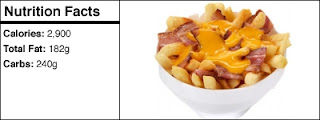
Just Wrong, Mate: Outback Steakhouse Aussie Cheese Fries

Outback Steakhouse Aussie Cheese Fries


Are the Aussies trying to mock us by giving us something they know we could never possibly work off in one day? Even if you split this monster of a fat bomb with three friends—it’s still just a side dish, and you’d still be packing away almost one thousand calories each. That’d take about two hours of kangaroo chasing in the outback just to burn off. Problem is, we ain’t got no outback in the US of A.

A better bet: Share the cheese fries with ten people instead.

Worst Dessert: Outback’s Chocolate Thunder from Down Under

Outback Steakhouse Chocolate Thunder from Down Under


I don’t mean to pick on Outback (who now no longer posts their nutritional information), but what were they thinking with this name? It reminds me of what happens after you’ve eaten there, not something you’d like to end a meal with. To burn this off you’d have to run for over two hours. Hmm … an apple isn’t sounding so bad after all.

A better bet: I would never feed this to a child, but you could order the Spotted Dog Sundae off the kid’s menu, and split it with another adult. It has 730 calories and 27 grams of saturated fat; diet food compared to the Thunder.

Worst Mash-Up: Sonic Drive-in Fritos Chili Pie

Sonic Drive-in Fritos Chili Pie


940 calories for chili? Well, I guess if you make it with Fritos chips and throw in a piecrust, anything is possible.

A better bet: A bowl of chili—without the Fritos.

Worst Appetizer: Chili’s Awesome Blossom

Chili's Awesome Blossom


Chili’s is all sorts of wrong. The one and only time I ate there, I almost dove over the table and made the waitress give me my money back, it was so bad. It’s clear now I was just in a salt and sugar-induced rage. Even with their crappy food laden with sodium, fat, and emulsifiers, you’ve got to admire them. How they turned a simple onion into a day’s worth of calories and three days worth of fat is a miracle of food science.

A better bet: Skip the appetizer. Your meal will most certainly contain more calories, fat, and carbs than you’ll need for a week or so.

Truly, this is the short list of bad items at America’s popular restaurants; the long list would encompass most of their menus. Eating at a Chili’s, Outback, or any big fast food or chain restaurant should come with some sort of warning sign, a prescription for high blood pressure medication, a membership at a gym, or at the very least, prominently displayed nutritional information. Now that would be hard to stomach.

(Info Sources: CalorieKing.com, Eat This, Not That by David Zinczenko)

First published February 2008
Copyright © 2006-2008, Real Girls Media Network, Inc. All Rights Reserved


© 2008 Thanks for taking the time to read my blog. Please feel free to peruse my blog for more great content.

My Other Websites: Are Your Vitamins Safe? Whole Food Nation Affiliate Link
Sunday, April 13, 2008

A Shot To Melt Fat? Doctors Concerned

'Lunchtime Lipo' Draws Concern from Doctors
Women Who Participated in Lipodissolve Injections Speak Out
By Elaine Tabacoff and Deirdre Cohen, April 11, 2008

What if there was a way to get rid of that unwanted fat without going under the knife? How convenient it would be to stop by a clinic during your lunch hour, get a few injections and dissolve away your trouble spots of extra fat.

That's what appealed to 45-year-old Sheila Yee of Riverbank, Calif. A third-degree black belt and martial arts instructor, she works out six days a week and is about as fit as a woman can be.

But like a lot of women her age, she couldn't seem to get rid of the pouch around her belly. "Who wants to take martial arts from someone who doesn't look like they're in shape?" she said.

Yee was intrigued by the local advertisements for a new procedure commonly called by the trade name Lipodissolve, which claims to melt away fat with a simple injection of drugs. To avoid surgical liposuction, Yee thought she'd found the answer.

"I just knew that there was no cutting, there was no blood. There's no stitches," Yee said.

Watch the story on "20/20" Friday (April 18, 2008) at 10 p.m. ET.

'Lunchtime Lipo'

Marketed as quick and easy "lunchtime lipo" at doctor's offices and spas around the country, it was enticing to many women who wanted a quick fix, women like Annette Clark and Paige Tate. The two 30-something moms were slim, like Yee, but fighting pesky unwanted stomach flab. "I thought it seemed like a miracle wonder and I was elated and couldn't wait to start," Clark said. All of the women, each from different states, said they were told by different spas that they were perfect candidates for Lipodissolve. The hefty price tag didn't deter them: Clark paid $2,400 and the other women paid $3,000 to $4,000 for a series of injections. Almost immediately after her first injections, Clark said she knew something was wrong. "They gave me about six injections across my abdomen and within a matter of minutes I started having severe burning. By the time I got home, about an hour later, I looked like I was eight months pregnant."

But she says the swelling was one of the milder side effects. A few months into the treatment, she said she had a severe allergic reaction at a local drugstore. "My whole body was just covered in hives, itching really bad. I became very hot as I was waiting for my medication to be filled. I woke up in an ambulance," Clark recalled.

Open Wounds and Staph Infections

Gigi Hinton, 30, was thrilled at the thought of trimming her thighs and knees. Hinton said her nightmare began after a second round of nearly 20 injections to her knee. "After it scabbed over, maybe after a week or two, it really felt like something started to eat away at the skin beneath. And I was left with an open wound on my right knee," she said. "Even the nurses in the spa said they had never seen anything like that before."

But if Hinton had simply looked on the Internet, she would have found plenty of horror stories. One posting was from Tate, who, after two treatments, wrote: "I was feeling constant headache, diarrhea & and the swelling would not go away."

Tate said she has been sick ever since and now has degenerative disk disease. "None of my health issues began until the day I started those injections," she said. "I have degenerative disk disease in the lower part of my back, exactly where there are two nodules that are between my muscle and my skin."

Yee said she also found a nodule in her stomach the size of a tennis ball and went back to the spa. She said she was stunned by the nurse's reaction.

"She looks at it and she's telling me 'oh my goodness that is so wonderful. All your fat cells have all congregated into one area. If all of our patients were like this, we'd be out of business because you know that fat's just going. You're the perfect person for this.'"

Disaster struck a few days later when that mass in her stomach nearly doubled to the size of a grapefruit. She had a life-threatening staph infection that required emergency surgery to remove a mass of dead tissue. Sheila says she could have died. "I contemplated going the next day. I might have died the next day. I might not have lived," she said. "They don't realize how serious this is and what they're doing to people. It's dangerous."

Doctors Warn Against Lipodissolve

Dr. Alan Gold, a member of the American Society for Aesthetic Plastic Surgeons, warned against Lipodissolve. "The two primary chemicals within this are called PC and DC: phosphatidylcholine and deoxycholate," he explained. "There's no standardized formula and other things may be added to those mixtures. At the present time, it is not approved by the Food and Drug Administration."

There are other doctors who also warn against the use of Lipodissolve, such as Dr. Julius Few, a Chicago plastic surgeon who is a member of the Injectable Safety Organization.

Few has treated more than a dozen patients with complications from Lipodissolve, including Hinton. "Whatever substance was injected basically caused the fat and the underlying tissue to die. And then that ultimately killed the skin," he said. "And it's much like what people have talked about with a flesh-eating infection. She will never look exactly the way she did before this treatment."

"20/20" brought hidden cameras to Pure Med Spa in St. Louis, the same spa Hinton visited, to find out how Lipodissolve is being sold. Three ABC staff members went in for consultations and were told they were good candidates for the procedure. The spa employees did warn about some of the temporary side effects of Lipodissolve, such as soreness and bloating in the injection site area. But when asked about other complications, spa employees said the procedure was safe, even telling us it that was approved by the FDA, which it is not. The first FDA approved study of Lipodissolve is only just starting.

Both Clark and Tate had their treatments done at the medi-spa chain FIG, which is now bankrupt. The company refused to comment to "20/20" about its former clients.

And what about Hinton? The medi-spa chain she visited for her Lipodissolve treatments, Pure Med Spa, wouldn't comment about her case or sit down for an interview. When we asked about the misinformation given by its employees, officials e-mailed "20/20," saying, "We make every effort to assure that our employees are fully educated about the procedure, its potential benefits and side effects."

Hinton said Pure Med Spa refunded her money and offered to pay her medical bills, but she has hired a lawyer.

Yee said she was refunded $3,500 from Advanced Lipo and Wellness Center, but the company wouldn't discuss her case with "20/20" either.

The spa's statement about Lipodissolve said, "As with any other injection, there is a risk of infection when the skin is broken. All prospective patients are made aware of risks & prior to treatment."

But Yee said she never expected her stomach would look like this. "Now I'm lopsided. I'm disfigured. There's dimpling on one side, lopsided. It's a mess."

Copyright © 2008 ABC News Internet Ventures

I found several YouTube videos about LipoDissolve here.

© 2008 Thanks for taking the time to read my blog. Please feel free to peruse my
blog for more great content.

My Other Websites: Are Your Vitamins Safe? Whole Food Nation Affiliate Link

Friday, April 11, 2008

8 Secrets of Successful Dieters

ConsumerReports.org


There's no question that sticking to a do-it-yourself diet plan is never easy. We rated popular diet books and took away eight practical, evidenced-based strategies for DIY dieters who want to lose weight on their own. Pick one—or two or three that work for you, and start losing!

1. Start right. While dieters might prefer to save calories by skipping breakfast, eating a substantial morning meal is recommended by every diet book we analyzed. Seventy-eight percent of the successful losers at the National Weight Control Registry say they eat breakfast, typically some cereal and fruit. The Registry, which enrolls people who can document that they have lost more than 30 pounds and kept it off for at least a year, has more than 5,000 members.

2. Choose (and limit) your fats. Many diet experts have backed away from avoiding fats, though this traditional approach is still used by very low-fat plans such as Dean Ornish’s “Eat More, Weigh Less” and the diet endorsed by the Pritikin Longevity Center.

Some research shows that a very low-fat diet can slow the progression of heart disease and breast and prostate cancer. But the dropout rate from that type of diet is high. Scientists now distinguish good fats from bad, based on copious evidence about their effect on blood cholesterol. Most of the popular diet books we analyzed warn against eating "bad" fat, including trans fats created when vegetable oil is hydrogenated, and the saturated fats from meat and dairy sources. Good fats include olive and other monounsaturated oils, nuts, avocados, and omega-3 oils from seafood and plant sources.

But good or bad, all fats have big calorie counts. They contain 9 calories per gram, compared with 4 per gram for carbohydrates and protein. The diet menu in “Eat, Drink, and Weigh Less” recommends liberally consuming healthy fats. But when we analyzed the meal plan, it totaled 1,910 calories per day, about 40 percent of them from fat, which would make weight loss unlikely for many people.

3. Eat healthfully—but sparingly. Backed by a growing body of research, nutritionists have come to a rough consensus on what a truly healthful diet looks like: Eat plenty of fruits and vegetables, and some lean meat and fish, healthy fats, and whole grains. And minimize refined grains, potatoes, full-fat dairy products, and added sweeteners--especially in the form of soft drinks. Studies of large populations the world over have shown that this diet reduces the risk of heart disease, diabetes, and certain cancers.

With minor variations, all the diet books we evaluated recommended some version of this eating plan--and their uniformly high ratings for nutrition reflect that. But they didn’t seem "willing to emphasize calories, or tell people to 'eat less,'" said Rena Wing, Ph.D., a professor in the department of psychiatry and human behavior at Brown University's medical school and a founder of the National Weight Control Registry.

The bottom line is that no matter how "healthy" your diet is, you still have to restrict quantities to lose weight. "The Best Life Diet," which got top marks from our reviewers, provides detailed instructions on proper serving sizes for many different types of foods.

4. Crank up the activity. To control weight from exercise alone requires a devotion that few nonathletes can summon: 60 to 90 minutes a day of moderate to vigorous exercise. But increasing the time you spend out of your chair—in formal exercise and activities such as housework and yard work—helps you burn at least some calories. And an active lifestyle will help you maintain your weight loss. National Weight Control Registry participants report doing about an hour a day of moderate-intensity exercise, like brisk walking. Of the books we evaluated, "You on a Diet," "The Best Life Diet," and "The Abs Diet" got high marks for their clear and detailed sections on exercise.

5. Consider cutting carbs. Virtually all diets restrict or eliminate "bad" highly refined carbs such as white bread, cookies, chips, and soft drinks. But a wholesale cutback on grains, fruits, and the sweeter vegetables, such as beets and carrots, was first popularized by the Atkins diet. Recent research has found that for up to a year, some people can indeed safely lose weight on Atkins. In the most recent study, published in the March 7, 2007, Journal of the American Medical Association, 311 overweight women were randomly assigned to one of four diets: Atkins, Zone, Ornish, and a control group on a traditional low-fat menu plus various behavioral strategies. On some measures, Atkins dieters came out ahead. "They had better triglyceride lowering than Zone dieters, better HDL raising than Ornish, and better blood-pressure lowering than all three," said Christopher Gardner, Ph.D., assistant professor of medicine at Stanford University, director of the study. But while Atkins dieters lost modestly more weight than Zone dieters, at 12 months their weight loss was similar to those on the Ornish or control diet.

Very low-carb diets are not for everyone. As Gardner points out, at least some participants lost 30 pounds and kept it off for a year on all the diets in the study. Successful losers in the National Weight Control Registry overwhelmingly report that they consume plenty of carbs while restricting fat and portions.

6. Fill up on low-density foods. One way to spare calories and still eat a satisfying amount of food is to focus your diet on foods that have fewer calories per bite, or low "energy density." Starting your meals with a low-calorie soup or salad and eating main dishes that are full of vegetables and fruits are the main tactics of the low-density diet.

Using government food consumption surveys, researcher Barbara Rolls has shown that people who eat a low-energy-density diet consume hundreds fewer calories per day than those with a high-density diet, yet eat a greater amount of food. And in research on volunteers in her Penn State lab, Rolls has found that consuming a low-density diet helps people lose weight and keeps them thinner. "Volumetrics," based on this research, has now been studied in clinical trials and finished at the top of our diet Ratings.

Whether they say so explicitly or not, many of the other diets and books we evaluated recommend strategies to reduce the energy density of food. People on the Weight Watchers point system, for instance, soon learn that if they spend too many of their daily point allotment on calorie-dense foods, they’ll go to bed hungry. “The Sonoma Diet” sternly limits dieters to no more than 3 teaspoons of olive or canola oil per day but permits unlimited quantities of low-calorie-density vegetables such as broccoli, spinach, and tomatoes. The Ornish diet, which bans fats almost completely, had the lowest energy density of any that we studied.

7. Bring back the scale. Many of the books we reviewed discourage the practice of daily, or even weekly, weigh-ins, at least in the initial stages of a weight-loss diet. But 75 percent of National Weight Control Registry members weigh themselves at least weekly. "They remain vigilant about their weight loss," Wing said. "It seems likely that if they gain a pound or two, they take steps to lose it before it can accumulate."

8. Bore yourself thin. Though many books promise readers they’ll be eating a huge variety of foods, in practice they limit variety of high-calorie foods. "The South Beach Diet," "The Sonoma Diet," and "UltraMetabolism" were especially restrictive in their severe initial phases.

Since variety stimulates the appetite, the more monotonous your diet, the less you’ll eat. So steer clear of buffet tables, which can be the dieter’s worst enemy.

To learn more, read what optimistic dieters say about losing weight, watch our free video on diet ratings, and check out our diet book ratings (subscribers only).


© 2008 Thanks for taking the time to read my blog. Please feel free to peruse my blog for more great content.

My Other Websites: Are Your Vitamins Safe? Whole Food Nation Affiliate Link

Wednesday, April 9, 2008

Laughter Does Your Body Good

Brady EilersHave you ever noticed how good you feel after having a good laugh? According to the Bible: "A happy heart is good medicine and a cheerful mind works healing, but a broken spirit dries up the bones." (Prov. 17:22 AMP). I agree.

Whether or not you get sick depends on your body’s ability to fight off infection and disease. Every year, there is more evidence that your thoughts, moods, emotions, and beliefs have a direct impact on the body’s health and healing mechanisms.

Cut Stress by Anticipating Laughter: Researchers say merely anticipating a laugh can jump-start healthy changes in the body by reducing stress hormone levels.

I knew that laughter was good for you but I didn't know that you could imagine the way you feel when you laugh and get results. Your imagination is powerful.

I love sharing a good laugh with friends. I received the following story in an email from a cousin of mine. I'm a native Texan so I can really relate to it.

Texas Chili Cook Off

Apparently, this is an actual account as relayed to paramedics at a chili cook-off in Texas. For those of you who have lived in Texas, you know how true this is. They actually have a Chili Cook-off about the time Halloween comes around. It takes up a major portion of a parking lot at the San Antonio City Park.

Judge #3 was an inexperienced Chili taster named Frank, who was visiting from Springfield, IL. Frank made this statement to the press before the cook-off started: "Recently, I was honored to be selected as a judge at a chili cook-off. The original person called in sick at the last moment and I happened to be standing there at the judge's table, asking for directions to the Coors Light truck, when the call came in. I was assured by the other two judges (Native Texans) that the chili wouldn't be all that spicy; and, besides, they told me I could have free beer during the tasting, so I accepted and became Judge 3."

Here are the scorecard notes from the event:

CHILI # 1 - MIKE'S MANIAC MONSTER CHILI

Judge #1: A little too heavy on the tomato. Amusing kick.

Judge #2: Nice, smooth tomato flavor. Very mild.

Judge #3 (Frank): Holy crap, what the hell is this stuff? You could remove dried paint from your driveway. Took me two beers to put the flames out. I hope that's the worst one. These Texans are crazy.

CHILI # 2 - ARIAL AUSTIN'S AFTERBURNER CHILI

Judge #1: Smoky, with a hint of pork. Slight jalapeno tang.

Judge #2: Exciting BBQ flavor, needs more peppers to be taken seriously.

Judge #3: Keep this out of the reach of children. I'm not sure what I'm supposed to taste besides pain. I had to wave off two people who wanted to give me the Heimlich maneuver. They had to rush in more beer when they saw the look on my face.

CHILI #3 - FRED'S FAMOUS BURN DOWN THE BARN CHILI

Judge #1: Excellent firehouse chili. Great kick.

Judge #2: A bit salty, good use of peppers.

Judge #3: Call the EPA. I've located a uranium spill. My nose feels like I have been snorting Drano. Everyone knows the routine by now. Get me more beer before I ignite. Barmaid pounded me on the back, and now my backbone is in the front part of my chest. I'm getting @!&&-faced from all of the beer.

CHILI #4 - BUBBA'S BLACK MAGIC

Judge #1: Black bean chili with almost no spice. Disappointing.

Judge #2: Hint of lime in the black beans. Good side dish for fish or other mild foods, not much of a chili.

Judge #3: I felt something scraping across my tongue, but was unable to taste it. Is it possible to burn out taste buds? Sally, the beer maid, was standing behind me with fresh refills. This 300 pound woman is starting to look HOT...just like this nuclear waste I'm eating! Is chili an aphrodisiac?

CHILI #5 - LISA'S LEGAL LIP REMOVER

Judge #1: Meaty, strong chili. Cayenne peppers freshly ground, adding considerable kick. Very impressive.

Judge #2: Chili using shredded beef, could use more tomato. Must admit the cayenne peppers make a strong statement.

Judge #3: My ears are ringing, sweat is pouring off my forehead and I can no longer focus my eyes. I farted, and four people behind me needed paramedics. The contestant seemed offended when I told her that her chili had given me brain damage. Sally saved my tongue from bleeding by pouring beer directly on it from the pitcher. I wonder if I'm burning my lips off. It really ticks me off that the other judges asked me to stop screaming. Screw them.

CHILI #6 - VERA'S VERY VEGETARIAN VARIETY

Judge #1: Thin yet bold vegetarian variety chili. Good balance of spices and peppers.

Judge #2: The best yet. Aggressive use of peppers, onions, and garlic. Superb.

Judge #3: My intestines are now a straight pipe filled with gaseous, sulfuric flames. I crapped on myself when I farted, and I'm worried it will eat through the chair. No one seems inclined to stand behind me except that Sally. Can't feel my lips anymore. I need to wipe my butt with a snow cone.

CHILI #7 - SUSAN'S SCREAMING SENSATION CHILI

Judge #1: A mediocre chili with too much reliance on canned peppers.

Judge #2: Ho hum, tastes as if the chef literally threw in a can of chili peppers at the last moment. I should note that I am worried about Judge #3. He appears to be in a bit of distress as he is cursing uncontrollably.

Judge #3: You could put a grenade in my mouth, pull the pin, and I wouldn't feel a thing. I've lost sight in one eye, and the world sounds like it is made of rushing water. My shirt is covered with chili, which slid unnoticed out of my mouth. My pants are full of lava to match my shirt. At least during the autopsy, they'll know what killed me. I've decided to stop breathing. It's too painful. Screw it; because I' m not getting any oxygen anyway. If I need air, I'll just suck it in through the 4-inch hole in my stomach.

CHILI #8 - BIG TOM'S TOENAIL CURLING CHILI

Judge #1: The perfect ending, this is a nice blend chili. Not too bold but spicy enough to declare its existence.

Judge #2: This final entry is a good, balanced chili. Neither mild nor hot. Sorry to see that most of it was lost when Judge 3 farted, passed out, fell over and pulled the chili pot down on top of himself. Not sure If he's going to make it. poor feller, wonder how he'd have reacted to really hot chili?

Judge #3: No Report


:) Unfortunately, we can't laugh all the time so we take The Pops for damage control.


© 2008 Thanks for taking the time to read my blog. Please feel free to peruse my blog for more great content.

My Other Websites: Are Your Vitamins Safe? Whole Food Nation Affiliate Link

Tuesday, April 8, 2008

From Lab to Lunch: Chemicals They Call Food

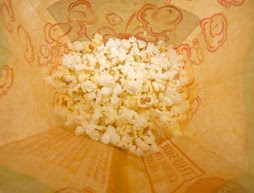
Picture of PopcornBy: Brie Cadman
April 7, 2008

The other day I was snacking on some bright orange “nacho” flavored tortilla chips when I decided to do something very stupid. I flipped the bag over and read the ingredient list. Given the color, I wasn’t expecting to find nature, distilled, but the double-digit list of ingredients, many of which I hadn’t seen since working in a lab, was still disconcerting. In fact, some of the chemicals were the same ones that drove me out of the lab. (You can only read “extreme neurotoxin” and “mutagenic” so many times before pondering a career change.). What were they doing in my chips?

A tortilla chip seems so simple (corn, oil, salt) but the intersection of synthetic chemistry and food manufacturing has taken us far away from simple and much closer to complex. Instead of nacho cheese, we eat synthesized substances meant to approximate the flavor or texture of cheese, no milk products involved. Preservation, emulsification, hydrogenation, distillation, and esterification has resulted in some good things (like reduced spoilage and food borne diseases), but has also resulted in some questionable food additives like the compounds below.

I Can’t Believe It’s Not—Diacetyl!
Diacetyl is the chemical that gives microwave popcorn that delicious buttery flavor without the use of any butter. Unfortunately, extensive exposure to diacetyl can lead to a serious, irreversible, and rare condition known as bronchiolitis obliterans. First seen in workers at a microwave popcorn packaging plant, the condition is commonly known as “popcorn lung.” One consumer (who, somewhat freakishly, ate around four bags of microwaved popcorn a day) has developed the disease, and researchers recently discovered that small amounts of diacetyl can cause lung and airway damage in mice.

The Alternative? OSHA didn’t do crap to protect workers, but lawsuits and negative publicity scared some manufacturers into removing the compound from their packaged kernels. However, diacetyl abounds in packaged foods with fake butter flavor, often under the guise of “natural and artificial flavoring.” As for popcorn, pop your own and use the real golden stuff. Butter=good; popcorn lung=bad.


Would You Like Diet or Regular Benzene?
Benzene is an industrial solvent and a known carcinogen, so food companies generally try to keep it out of their products. However, two chemicals found in soda, sodium benzoate (a preservative) and ascorbic acid (vitamin C), can react to form benzene, especially in the presence of heat or light. In 2007, Coca-Cola and Pepsi agreed to settle lawsuits brought against them after benzene was detected in their products. The suit alleged that Pepsi’s Diet Wild Cherry drink had benzene levels nearly four times the maximum level set by the Environmental Protection Agency for drinking water. Oopsy. Both companies agreed to reformulate; however, thousands of soft drinks containing benzoate and citric acids are still on the market.

The Alternative? Probably most Coke and Pepsi products are “safe” (who knows what’ll turn up next!), but it’s a good idea to check the label.


Gone Fishin’—For Silly Puddy
The sticky texture of Silly Puddy is due, in part, to a widely used silicone-based polymer called polydimethylsiloxane (PDMS). In addition to Silly Puddy, it is also found in caulks, adhesives, cosmetics, silicone grease, knuckle replacements, silicone breast implants, and … in McDonald’s Fish Filet Patties. They add it as an “antifoaming agent.” I had to look this one up (why is the fish foaming?) and as it turns out, foam, produced when vats of liquids are mixed or agitated, is a big problem for large scale food manufacturers. Lots of foam means frying vats can’t be filled to capacity, meaning fast food restaurants can’t fry as many fish (potatoes, apple crisps, whatever) as mechanically possible. Hence the need for silicone oils like PDMS.

The Alternative? The FDA allows up to ten parts per million of anti-foaming agents to be used in food products; they’re found in many processed foods. Though not harmful at these levels, their use does increase the amount of acrylamide (a naturally occurring but nasty chemical) that is formed during frying.


Ahhh, Olestra
Only in America would an indigestible molecule that inhibits the absorption of vitamins and minerals, causes abdominal cramping, loose stools, and gas take in over $400 million in its first year. Only in America would a chemical most closely associated with two words—anal leakage—still have a chance in the food market. (Saw it yesterday in a can of Pringles Light, giving new meaning to the “once you pop, you can’t stop” slogan.) Interestingly, Olestra was first filed with the FDA as a drug, not a food product. What a tangled web we weave…

The Alternative? Lick some raw chicken to get your anal leakage fix.


Too Sweet to Be True
Artificial sweeteners are generally considered safe (save for saccharin, which has that pesky “has been shown to cause cancer in lab rats” warning). However, two studies indicate they may not exactly be as guilt-free as once imagined.

The first study showed that, compared with those who drank no soda, people who consumed one or more sodas a day—diet or regular—had a 50 percent higher risk of metabolic syndrome, a group of risk factors characterized by excessive abdominal fat, high blood pressure, and high glucose. Soda companies balked—how can diet beverages cause these things when they contain no calories? Logic would side with them, except for study number two, done in rats. It showed that rats fed with foods containing artificial sweeteners were more likely to overeat compared with those rats fed food containing real sugar. Reason? Sugar triggers our innate system to recognize sweet calories and restrict further food consumption; fake chemicals don’t trigger the “eat less” mechanism.

The Alternative? Calorie free sodas don’t add on weight, excess food does. However, if you’re drinking lots of diet soda and still loosening up the belt, you may want to rethink the diet approach. (Also, see benzene above.)


Hydrogenation Station
Oils are liquid at room temperature, while fats, like butter and lard, are solid. One way to make vegetable oil into a semi-solid compound, perfect for use in long-lifed packaged foods, is to hydrogenate it. Partial hydrogenation gets rid of some of the good unsaturated fats and also creates trans fats, the black sheep of the fat world, thought to be more deleterious to the old ticker than lard.

The Alternative? Bad press and labeling requirements have caused many food companies to remove trans fats from their products; check labels. (Kraft Fat Free Singles, for instance, contain no saturated fat, but do contain partially hydrogenated oils.) Regular, unsaturated vegetable oil is the perfect alternative for frying, yet restaurants can still use the partially hydrogenated stuff, unless the FDA, which still labels the oil as “generally recognized as safe,” steps up and bans it.


Butylated Hydroxyanisol (BHA)
BHA is an antioxidant that prevents fats and oils from spoiling. BHA is added to packaged foods, baked goods, some cereals, and meats as a preservative. It has been found to cause cancer in laboratory rodents; however, it causes cancer in an organ that humans don’t have, so it’s hard to translate the research into human populations. The National Toxicology Program states that BHA is “reasonably anticipated to be a human carcinogen based on sufficient evidence of carcinogenicity in experimental animals.” Funny, it’s still in our food chain.

The Alternative? Check labels and (if this hasn’t already become clear) avoid packaged foods that have a shelf life lasting longer than the average tenure of a Supreme Court Justice.

As with most chemicals, dose makes the poison; small amounts of the above chemicals ain’t going to kill you (at least according to the FDA). But neither would eating a piece of real cheese.

Copyright © 2006-2008, Real Girls Media Network, Inc. All Rights Reserved


© 2008 Thanks for taking the time to read my blog. Please feel free to peruse my blog for more great content.

My Other Websites: Are Your Vitamins Safe? Whole Food Nation Affiliate Link
Wednesday, April 2, 2008

"I Can Make You Thin with Paul McKenna"

Paul McKenna's book I Can Make You ThinI saw a couple of previews of TLC's "I Can Make You Thin with Paul McKenna" and thought it looked interesting but soon forgot about it. Then while channel-surfing Monday night I stumbled upon it.

My daughter, Rachael, was in her room studying for a test. So I ran to tell her "I Can Make You Thin with Paul McKenna" was on so she could watch it while she studied... yeah right. I then went back into the kitchen to watch it at the bar.

At the next commercial break, I jumped up to go ask Rachael what she thought about the show. We met each other in the hallway, and together exclaimed, "This is great!" We then ran into the living room to watch the rest of the show together.

The show we watched was called, "Overcoming Emotional Eating". I don't know about you, but I need all the help I can get in that area.

What is emotional eating? For example, let's say your boss berates you in front of your peers, so you go to McDonald's for lunch and you order a Quarter Pounder with cheese meal and when the lady asks if you want to super-size your order you say, "Yep! Super-size it and give me a large chocolate shake too." Or your dog dies so you sit with it's picture and a half-gallon of ice cream to help numb the pain. (No need for more scenarios, you get the picture. )

McKenna explained how people use food to self-medicate against feelings of boredom, sadness, anger, and anxiety.

To battle emotional eating, he demonstrated a tapping technique designed to help people discover whether they want to eat because they are hungry or because they want to change the way they feel.

The way it works is that you tap on accupressure points when you are experiencing a craving. He asked the studio audience to imagine a scenario that would trigger an emotional eating binge, then to rate it on a scale of 1 to 10 and then follow his tapping technique.


In the YouTube.com link above, McKenna demonstrates the Thought Field Therapy (TFT) technique on his British show aired in January (a clip from TLC's show was not available). He attributes the discovery of this compulsion/craving-killing exercise to U.S. clinical psychologist Roger J. Callahan.

The theory is that our brain is like a computer and you can reprogram your brain by hitting certain accupressure points on your face and hand. It may take a few tries but McKenna says it actually works to release energy from those points and that is what helps kill the craving.

I can't wait to watch next weeks' show! You can go to Paul McKenna's website to join his free "I Can Make You Thin" club and as a member be able to watch several videos and join the community.


© 2008 Thanks for taking the time to read my blog. Please feel free to peruse my blog for more great content.

My Other Websites: Are Your Vitamins Safe? Whole Food Nation Affiliate Link

Tuesday, April 1, 2008

Subway's Biggest Loser

I read the following article online today and wanted to share it. Jared Fogle is a regular guy who did something amazing. He lost 245 pounds and has kept it off for ten years! He is an inspiration to me.


Subway's Biggest Loser
By Sally Squires
Tuesday, April 1, 2008

He's known simply by his first name -- Jared -- and his claim to fame is being a loser, in fact a super-loser.

Meet Jared Fogle, who, as a college junior, shed a whopping 245 pounds on a self-devised diet of Subway sandwiches and became a spokesman for the fast-food chain in the process.

Now he has reached another milestone: maintaining that weight loss for 10 years.

With a rising obesity epidemic, the number of people who need to shed triple-digit pounds is also increasing. A growing number try to meet that goal surgically with stomach stapling or gastric bypass. That makes Jared's accomplishment all the more important.

"It's fantastic that he's done this, because weight-loss surgery is taking on such emphasis," says Brown University psychologist Rena Wing, co-founder of the National Weight Control Registry, a group of 6,300 "successful losers" who have shed at least 30 pounds and kept it off for at least a year.

"Jared supports our findings in the registry that it is possible to achieve and maintain triple-digit losses using behavior changes," Wing says. He lost his weight the old-fashioned way, by eating less and gradually moving more.

At his peak of about 425 pounds, Jared figures that he consumed about 10,000 calories daily, roughly five times the intake of the average adult.

How does a person consume that much? Easy. For breakfast, Jared ate two bacon-and-egg sandwiches with greasy hash browns and washed it down with coffee with cream and plenty of sugar.

Lunch was often an entire large pizza with extra meat and cheese. Bean burritos with cheese were his favorite afternoon snack, followed by an all-you-can-eat Chinese buffet for dinner with ice cream for dessert and a bedtime "snack" that was a meal in itself of burgers, fries and more dessert. Not surprisingly, Jared says, his weight increased "exponentially."

Like many, his weight battle began in childhood -- although no one else in his family is overweight. His father is a family physician; his mother, a preschool teacher. None of his siblings have struggled with added unwanted pounds.

"I grew up knowing what was healthy and not healthy to eat," Jared says. "My parents always cooked fairly healthy food, and they didn't buy a lot of junk food."

Even so, he piled on pounds beginning in about the third grade. "From that point, food slowly but surely consumed me," says Jared, who has started a foundation to help prevent childhood obesity.

Despite concern from his parents about his increasing girth, he resisted all their attempts to help him. "I even refused to go to the doctor," he says. "I knew the doctor would tell me to lose weight." As a rebellious teenager, he simply ate more.

"I ate lots of fast food and was always super sizing," he says. "I always wanted the biggest portion. I always wanted to be in a state of constant fullness."

It took his worried college roommate at Indiana University to persuade Jared to make changes. "He was a pre-med major and very concerned about my health," Jared says.

The roommate slipped a tape recorder under Jared's bed to capture the sounds that Jared made while sleeping. He played the tape for Jared and told him that he probably had sleep apnea.

Closely linked to obesity, sleep apnea causes brief interruptions in breathing during sleep and is a major risk factor for heart disease. Jared already had edema, or swelling, in his feet and ankles, often a symptom of heart problems. Plus, he was sleeping for 12 hours a day, "waking up and being completely exhausted," he says. "To be that heavy, that morbidly obese, affects every part of your life. After years of denial and not accepting that I had a problem, I had developed both sleep apnea and edema. I thought, 'Wow. Enough is enough. I need to make some changes.' "

His first attempts at weight loss were unsuccessful. Then he stopped in the Subway outlet adjacent to his apartment building. While waiting for his order, he read a nutrition brochure and looked at the low-fat sandwich section. This was his weight-loss eureka moment: He realized his "diet" could be composed of two of those sandwiches a day.

"It was sort of a crazy idea, but I thought it was worth a shot," he says.

As a college student who liked to sleep late, Jared decided to eat his first meal at midday. He ate a six-inch turkey sub with plenty of vegetables but no mayonnaise, oil or cheese, plus a small bag of baked chips. He also switched from regular Mountain Dew and orange soda to diet soft drinks. "That was very tough," he says.

For dinner, he ate a foot-long veggie sub with another bag of baked chips and more diet soda. The two meals added up to about 1,500 calories per day, about the amount recommended by many weight-loss programs.

When he felt hungry, Jared reminded himself that he was probably losing weight. The first month, he lost about 30 pounds but told no one of his efforts. By three months, he had shed 94 pounds. Friends and family started to notice. "Everyone was skeptical about it," he says, especially his father, who insisted that Jared have his blood tested regularly to make sure that nothing was going wrong. "Once they saw the weight was really coming off, they were really happy for me."

After he lost 100 pounds, Jared began to walk 30 minutes daily. It took him nine more months to shed the remaining weight. "The rate of weight loss slowed the more I lost, but it never stopped," he says. "At the end, I almost lost a little too much weight." He added back about 15 pounds the first year but has maintained his weight at 190 ever since.

Jared's story was featured in the university paper. Local radio stations picked it up. Then Subway contacted him to become the company's spokesman. He has since made more than 50 commercials and travels more than 200 days a year for company appearances.

Although Jared still dines frequently on Subway sandwiches (sweet onion teriyaki chicken with baked chips is his favorite meal), he has learned to eat other healthy food. "I read more nutrition labels and pay attention to what is a healthy way to prepare something versus not a healthy way," he says. "I'm not a calorie-counter per se, but I have learned to know what is a decent size of food for me."

He works out regularly with a personal trainer when he's at home in Indianapolis. On the road, he walks regularly for exercise.

"I think the reason why I have been around for nine years is that people can relate to my story," Jared says. "I'm not some buff jock or famous actor. I'm just sort of like everybody else."

In short, he's trying to eat smart and move more one day at a time.


© 2008 Thanks for taking the time to read my blog. Please feel free to peruse my blog for more great content.

My Other Websites: Are Your Vitamins Safe? Whole Food Nation Affiliate Link

Related Posts Plugin for WordPress, Blogger...